Buying guides
Cypress, Pine or Bluegum? Choosing the Right Timber for Your Build in Kenya

Walk into almost any timber yard in Kenya and three names come up again and again: cypress, pine and bluegum. All three are plantation-grown, all three are affordable, and all three end up in roofs, fences and building sites across the country. But they behave very differently once they are cut, nailed and left out in the weather. Choosing the right one for each part of your build saves money and avoids repairs later.
Cypress: the all-round roofing timber
Cypress (mostly Cupressus lusitanica in Kenyan plantations) is the timber most fundis reach for when they are roofing a house. It has a pale yellow-brown to pinkish colour, a fairly straight grain and a pleasant smell when freshly cut.
- Strengths: easy to saw and plane, holds nails well, stays reasonably straight when properly seasoned, and is widely available in standard sizes.
- Durability: the darker heartwood has some natural resistance to decay, but the paler sapwood does not. Treat cypress that will be in contact with the ground, exposed to rain, or used in termite-prone areas.
- Best for: rafters, trusses, purlins, wall plates, ceiling brandering, door frames, shelving and general carpentry.
Pine: light, quick-growing and economical
Pine in Kenya is mainly Pinus patula and Pinus radiata. It is lighter in colour and weight than cypress and usually has more visible knots. Because it grows fast, it is often the cheaper option.
- Strengths: light to carry, quick to cut, takes paint and varnish well once dry.
- Weaknesses: low natural durability. Untreated pine is vulnerable to insects, termites and fungal staining, and it can move as it dries.
- Best for: formwork and temporary site work, battens, interior joinery, ceiling boards, pallets and furniture that stays indoors. Use treated pine if it will carry a structural load or sit in damp conditions.
Bluegum: heavy, hard and strong
Bluegum is the everyday name for eucalyptus, mainly Eucalyptus grandis and E. saligna in Kenya. You will meet it as round poles as often as sawn timber.
- Strengths: dense and strong for its size, which makes it a favourite for poles, posts and props.
- Weaknesses: sawn bluegum can split, twist and check as it dries, and it is hard on blades and nails. Untreated bluegum in the ground is quickly attacked by termites.
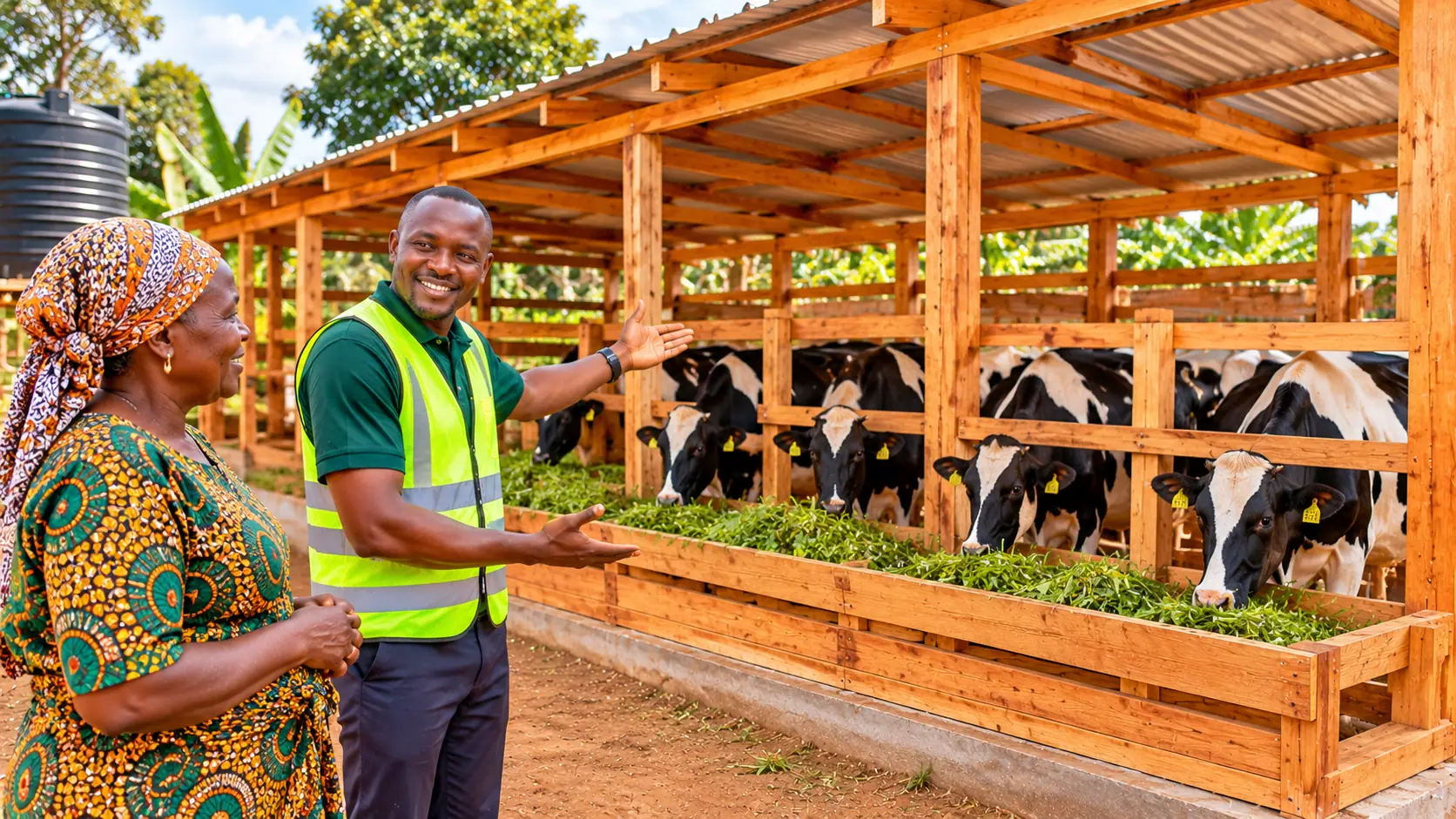
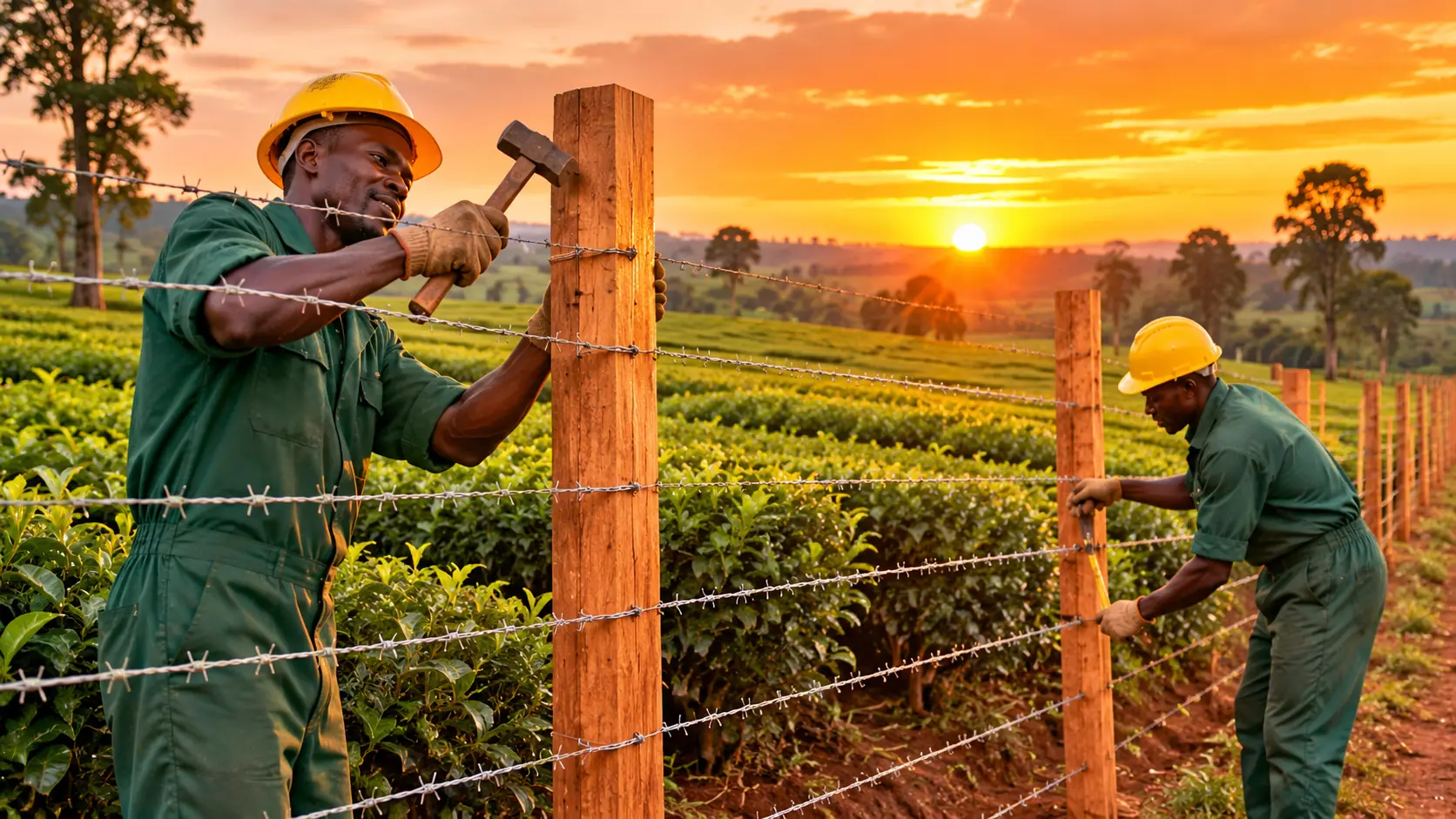
- Best for: fencing posts and strainers (treated), scaffolding poles and props on site, farm structures, and heavy framing where its weight is not a problem.
Quick comparison
| Species | Weight and hardness | Natural durability | Typical uses |
| Cypress | Medium | Moderate (heartwood) | Roofing, framing, door frames, joinery |
| Pine | Light | Low unless treated | Formwork, battens, ceilings, indoor joinery |
| Bluegum | Heavy and hard | Low in the ground unless treated | Posts, poles, props, farm structures |
What to check before you pay
Whatever species you choose, the quality of the individual pieces matters as much as the name on the invoice. When you collect timber, take a few minutes to check:
- Straightness. Sight along each length. Pieces that bow, twist or spring are hard to fix and will show in a roof line.
- Dryness. Well-seasoned timber feels lighter and stays straighter. Very wet timber will shrink and may twist after it is fixed.
- Defects. Avoid large loose knots on load-bearing edges, splits running in from the ends, insect holes and bark (wane) along the edges of structural pieces.
- Treatment. Ask whether the timber is treated and with what, especially for anything going into the ground or near termites.
- Quantity. Order 5–10% extra to cover offcuts and the odd rejected piece. It is cheaper than a second trip.
The short answer
Use cypress for most roofing and framing, pine for formwork and indoor work where budget matters, and treated bluegum for posts and poles. If you are not sure, send us your plan or your fundi’s list and we will help you match each item to the right timber.
Need these materials?
Send your list to the yard and we’ll reply with sizes, stock and prices.