Farm & fencing
Treated Fence Posts: How to Build a Farm Fence That Lasts
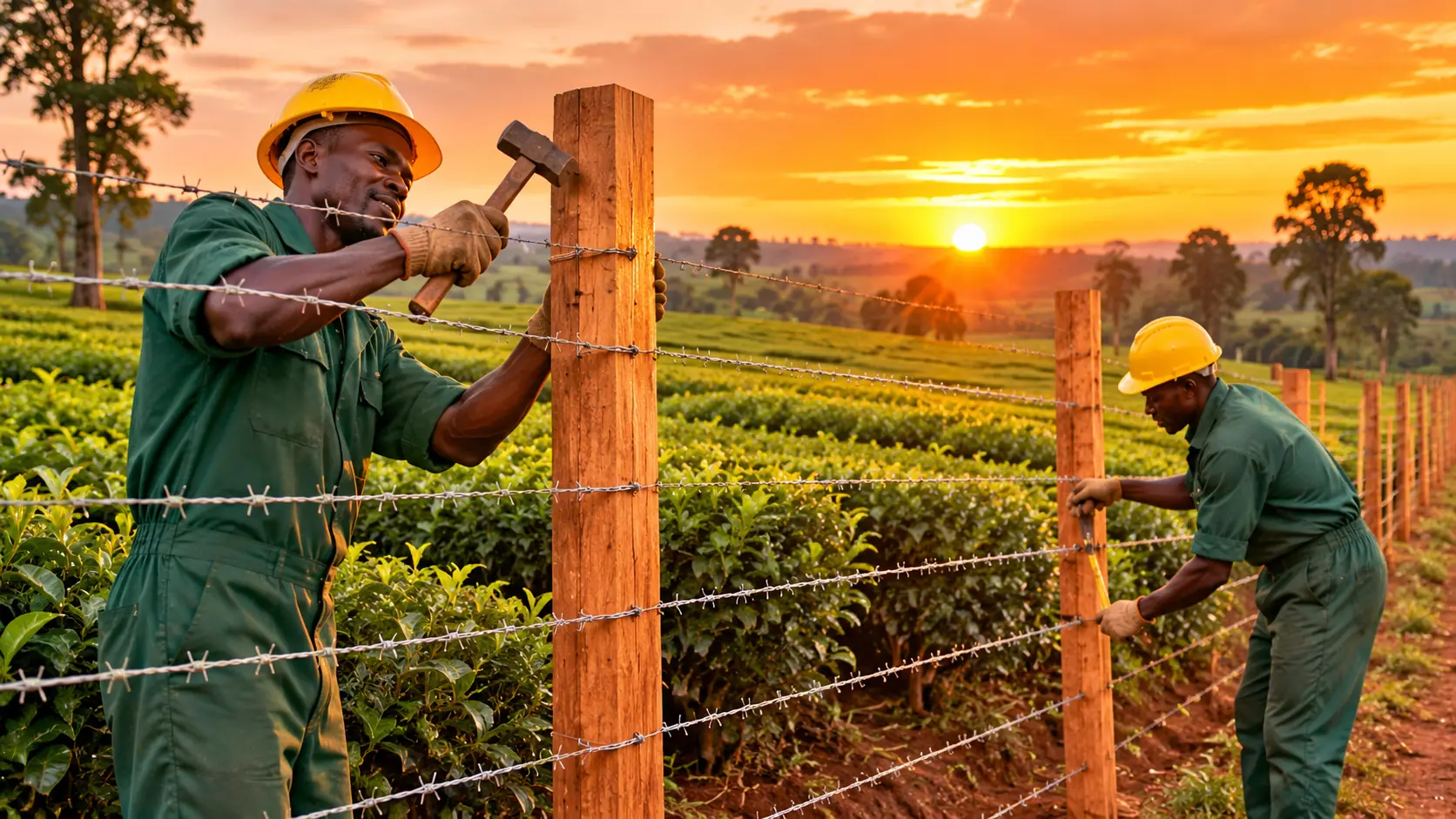
A fence is only as good as its posts. Wire can be re-tensioned and replaced, but once posts rot or get eaten at ground level, the whole line starts to lean. Choosing the right posts and installing them well is the difference between a fence that lasts a couple of seasons and one that lasts for many years.
Why untreated posts fail so fast
The point where a post enters the soil is the hardest place for wood to survive. It stays damp, it is full of fungi, and in much of Kenya it is right where termites feed. Eucalyptus (bluegum) is strong, but its untreated wood has little natural defence below ground. Field trials in East Africa have found that untreated eucalyptus post samples can be attacked by termites within the first weeks of being buried, while posts treated with preservative held out far longer.
Understanding treatment
- CCA pressure treatment. Copper chrome arsenate is forced deep into the wood under vacuum and pressure, where it becomes chemically fixed. It protects against both rot and termites and is the most common treatment for poles and posts in Kenya. CCA-treated wood often has a light green tint.
- Creosote and tar-oil treatment. Also used for poles in high-risk areas. It is effective but dark, oily and strong-smelling, so it is better suited to farm and utility use than to homes.
- Brush-on preservatives. Useful for treating cut ends and for timber above ground, but a surface coat does not reach deep enough to protect a post in the soil the way pressure treatment does.
Home remedies such as soaking post ends in used engine oil are common, but the protection is limited and the oil contaminates soil. For a fence you want to forget about, buy posts that have been properly treated.
Choosing your posts
- Line posts carry the wire along the fence. Straight poles of around 3–4 inches diameter are typical for barbed wire and chain link on farms.
- Strainer, corner and gate posts take the pull of tensioned wire. Use thicker poles — 5–6 inches or more — and brace them with a diagonal stay.
- Length. A common rule of thumb is to bury about one third of the post’s length. Allow for the fence height you want above ground plus this depth.
Installation tips that add years
- Keep the treated end in the ground. If you have to shorten a post, cut from the top, and paint any cut surface with preservative.
- Compact the backfill in layers of soil and stones, tamping as you go, so the post cannot rock.
- Shed water from the top. Cut post tops at a slight angle or cap them so rain does not sit on the end grain.
- Brace every strainer. Corners, gates and long straight runs need properly braced strainer posts, or the wire will pull the line over.
- Space line posts evenly. Around 3 metres apart is common for farm wire fences; closer spacing suits livestock pressure and soft ground.
Handling treated timber safely
- Wear gloves when handling freshly treated posts and wash your hands before eating.
- Never burn treated offcuts — the smoke and ash contain the preservative chemicals.
- Do not use treated wood for feed troughs, chopping boards or anywhere it will touch food or water.
Planning your fence
Measure the boundary, mark corners and gates, then work out the number of strainers, line posts and stays. Send us the length of fence and the type of wire, and we will help you work out how many posts of each size to order.
Need these materials?
Send your list to the yard and we’ll reply with sizes, stock and prices.