Ceilings & finishing
Gypsum or Timber Ceiling? A Practical Guide for Kenyan Homes
The ceiling is one of the last big decisions in a build, and one of the most visible. In Kenyan homes the two most common choices are gypsum board and timber. Both can look excellent; they simply suit different styles, budgets and rooms.
Gypsum ceilings
Gypsum board (also called plasterboard) is a panel of gypsum plaster faced with strong paper. In Kenya it is most commonly sold in sheets of 1.2 × 2.4 m, in 9 mm and 12 mm thicknesses.
- 9 mm is the usual choice for ceilings because it is light and easy to fix overhead.
- 12 mm is preferred for partitions and where you want a stiffer board or better sound reduction.
- Moisture-resistant gypsum boards are made for kitchens, bathrooms and other humid rooms.
What goes with it: a framework of galvanised steel channels and studs (or timber brandering), drywall screws, jointing tape, jointing compound and cornices for the wall edge. Once jointed and painted, the result is a smooth, seamless surface that suits modern interiors and hides wiring and downlights neatly.
Timber ceilings
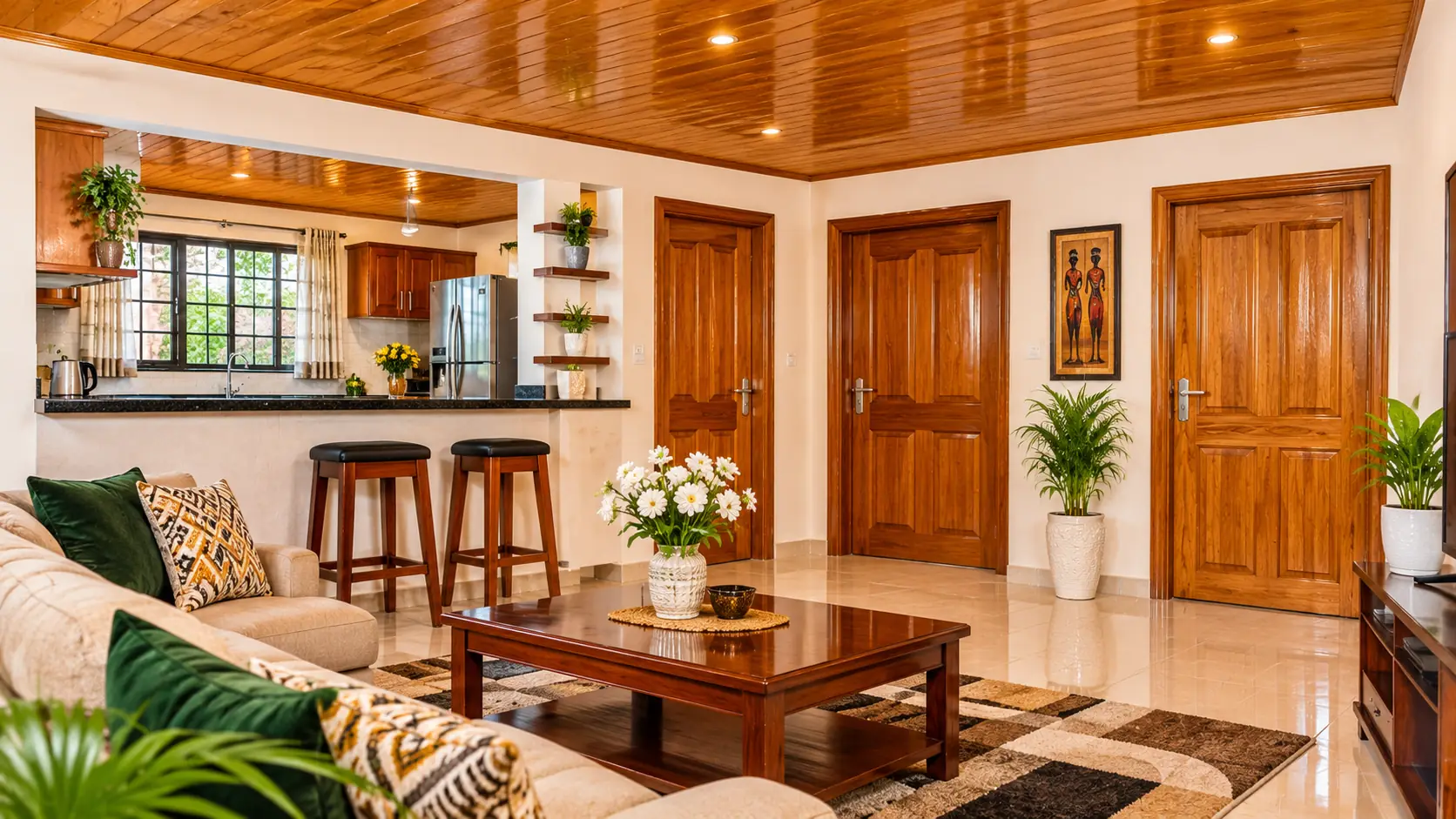
A timber ceiling uses tongue-and-groove boards — usually pine or cypress — nailed to timber brandering. Varnished or stained, it gives a warm, natural look that many homeowners love, particularly in living rooms and verandas.
- Character: visible grain and colour that deepens over time.
- Repairs: individual boards can be replaced if damaged.
- Care: timber needs to be dry and treated against insects before fixing, and it benefits from a fresh coat of varnish every few years.
Comparing the two
| Feature | Gypsum | Timber |
| Look | Smooth, modern, paintable | Warm, natural grain |
| Weight | Light | Heavier |
| Damp rooms | Use moisture-resistant boards | Needs sealing; avoid constant humidity |
| Fire | Gypsum core offers some fire resistance | Combustible; treat and keep away from heat sources |
| Upkeep | Repaint when needed | Re-varnish every few years |
Tips for either ceiling
- Fix roof leaks first. Water from a leaking roof will stain gypsum and swell timber. Check the roof after a heavy rain before you close the ceiling.
- Plan the lighting and wiring early. Mark downlight and socket positions before boarding so you do not cut holes twice.
- Keep the roof space ventilated. Air movement keeps the space cooler and stops condensation.
- Store materials properly. Gypsum boards should lie flat and dry; timber should be stacked straight with spacers so air can move around it.
- Order accessories with the boards. Channels, screws, tape, compound and cornices are easy to forget and can hold up the whole job.
Mixing both
You do not have to choose one for the whole house. A popular approach is gypsum in bedrooms, kitchens and bathrooms, with a timber feature ceiling in the living room or on the veranda.
Tell us the room sizes and we will help you list the boards, framing and accessories you need.
Need these materials?
Send your list to the yard and we’ll reply with sizes, stock and prices.