Buying guides
Timber Sizes in Kenya Explained: 2×2, 3×2, 4×2, 6×1 and What Each Is For
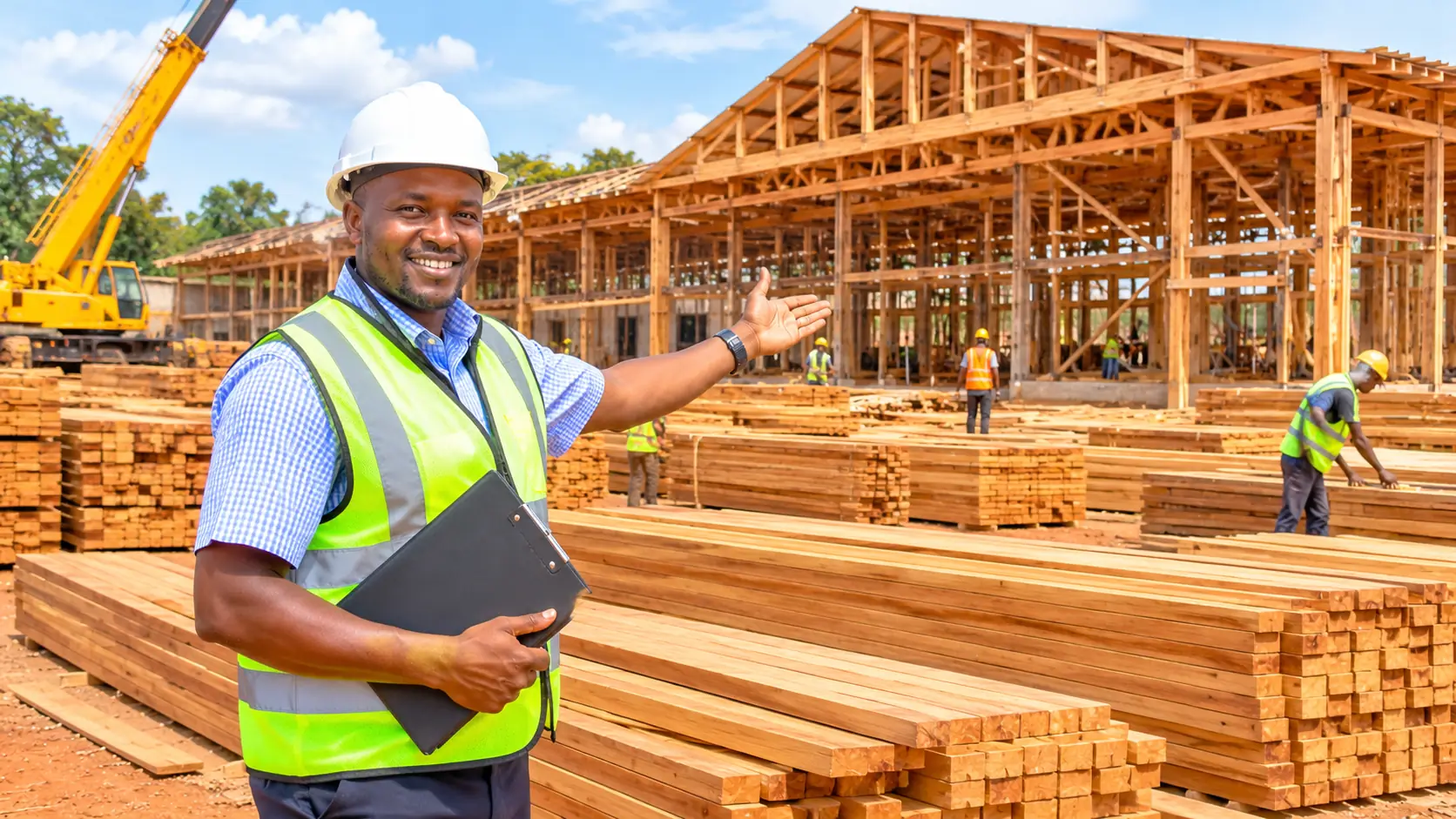
If you have ever read a fundi’s materials list, you will have seen lines like “4×2 – 30 pcs × 12 ft” or “2×2 brandering – 60 pcs”. Kenyan timber has its own shorthand, and once you understand it, ordering becomes much simpler and quotes become easier to compare.
How timber is described
Timber in Kenya is still described in inches for its cross-section and in feet for its length:
- “4 by 2” (4×2) means a piece roughly 4 inches wide and 2 inches thick — about 100 × 50 mm.
- The length is given separately in feet, for example 10 ft, 12 ft or 16 ft. Which lengths are available depends on the stock at the yard.
- These are nominal sawn sizes. Timber that has been planed smooth will measure slightly less.
How timber is priced
Most sawn timber is sold by the running foot — the price per foot of length for that size. To work out the cost of an item:
Price per foot × length of each piece × number of pieces = cost
For example, 20 pieces of 4×2 at 12 ft long is 240 running feet. At an example price of KES 65 per foot, that comes to KES 15,600. Boards such as marine board and blockboard are priced per sheet, and poles per piece.
Common sizes and what they are used for
| Size (inches) | Approx. mm | Typical uses |
| 2×2 | 50 × 50 | Ceiling brandering, light framing, battens |
| 3×2 | 75 × 50 | Purlins and battens, studs, light rafters |
| 4×2 | 100 × 50 | Rafters, truss members, wall plates, door frames |
| 4×3 | 100 × 75 | Wall plates and heavier framing |
| 4×4 | 100 × 100 | Posts for verandas, sheds and pergolas |
| 6×2 | 150 × 50 | Longer rafters, ties and beams (as designed) |
| 6×1, 8×1, 9×1 | 150/200/225 × 25 | Boards: fascia, shuttering, cladding, shelving |
These are typical uses, not a design. The right size for a rafter or beam depends on the span, the spacing, the roofing material and the load. Follow your architect’s or engineer’s drawings for anything structural.
Working out how much you need
- List every member from the drawings or the fundi’s list: rafters, ties, struts, purlins, wall plates, fascia and so on.
- Group by size and length. For example, “4×2 × 14 ft – 26 pcs”.
- Round up to lengths that exist. If you need 11 ft pieces, you will usually buy 12 ft and cut.
- Add 5–10% for waste and for any piece you reject because of a split or a twist.
- Decide on treatment. Anything near the ground, exposed to rain or in a termite area should be treated.
What to tell the yard when ordering
A clear order gets you an accurate quote the first time. For each line, include:
- the species (cypress, pine or bluegum),
- the size (for example 4×2),
- the length in feet,
- the number of pieces,
- whether you want it treated, and
- where it needs to go — collection or delivery.
You can add timber to your order on our shop and send the list straight to WhatsApp, or simply photograph your fundi’s list and send it to us. We will reply with sizes, availability and a total.
Need these materials?
Send your list to the yard and we’ll reply with sizes, stock and prices.